What Size Quilt Can You Make With a Layer Cake? Every Bed Size, in Inches and cm
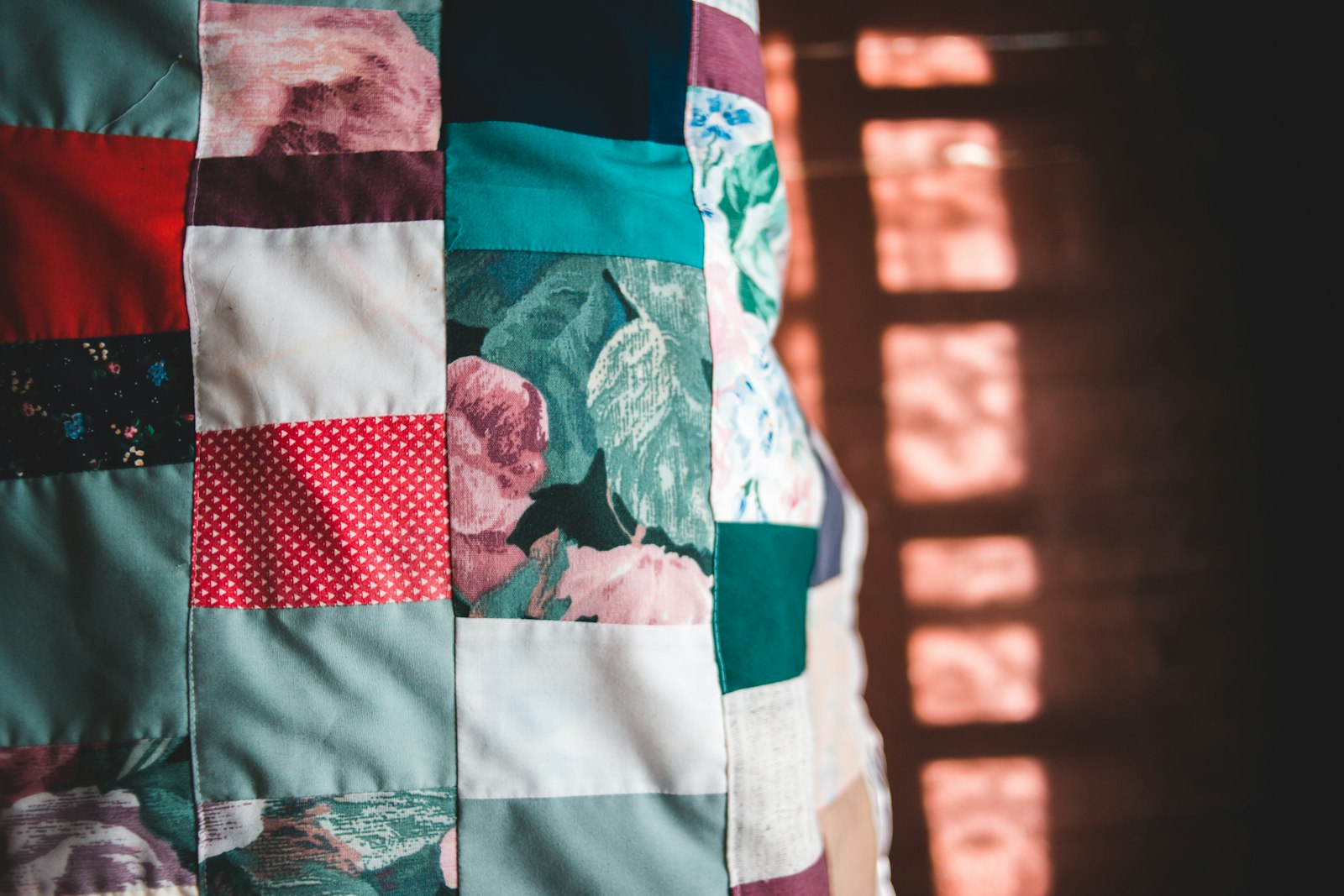
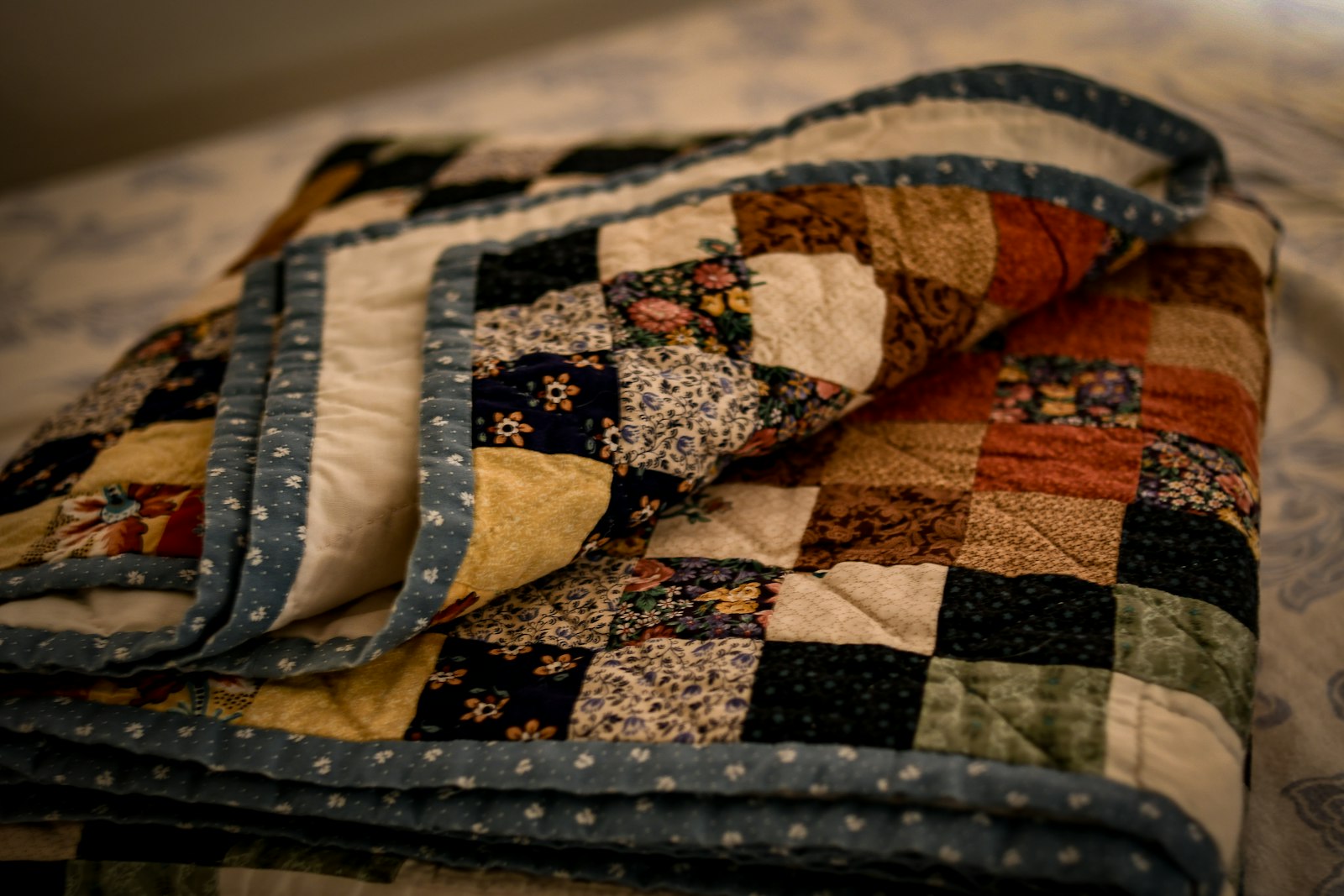
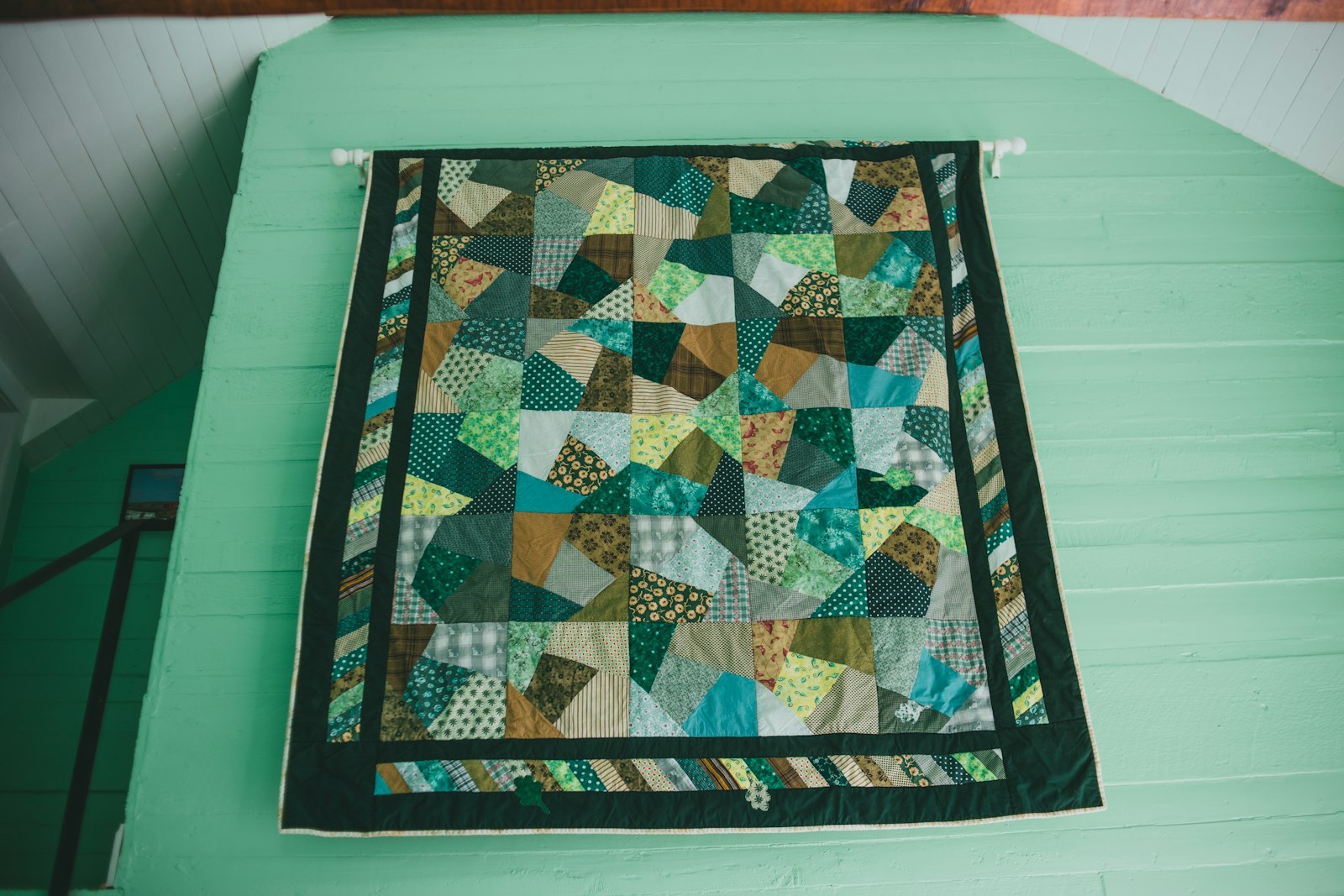
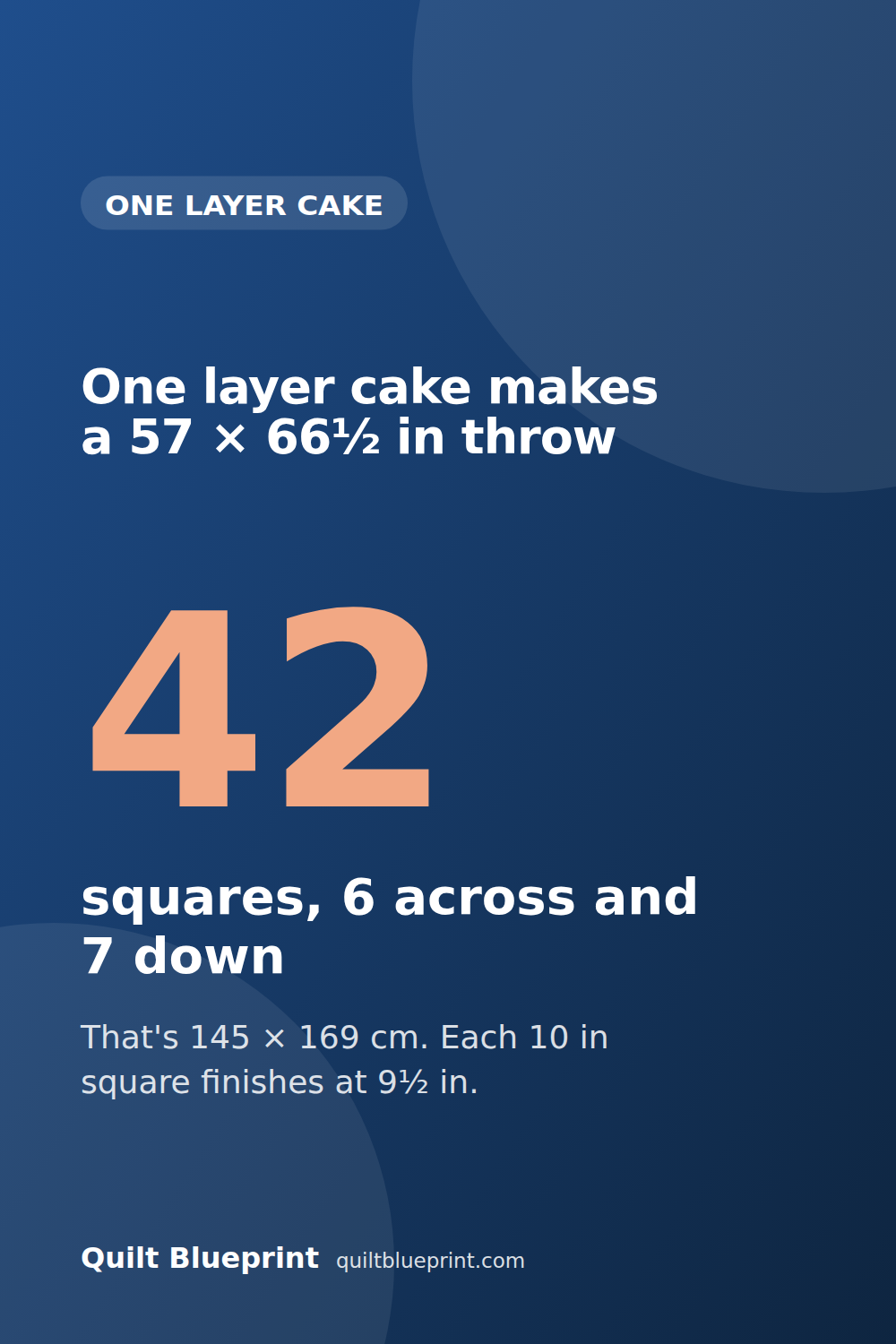
One layer cake makes a 57 × 66½ in (145 × 169 cm) throw when you sew its squares together whole. A layer cake is 42 squares cut 10 × 10 in. Sewn with a ¼ in seam on every side, each square finishes at 9½ in, and 42 of them lay out 6 across and 7 down with none left over. That's a throw a little bigger than the standard 50 × 65 in.
For a bed you need more than one. A twin takes 2 layer cakes, and a full, queen or king takes 3, or 2 plus a border on the full and queen.
The chart below has every size, and the sections after it show the working, so you can check it against the stack on your table.
What's in a layer cake, and what a 10 in square finishes at
A layer cake is a stack of precut squares from one fabric collection, each 10 × 10 in (25.4 × 25.4 cm). Most stacks hold 42. Other makers sell the same thing as a 10 in stack or a stacker, and most of those are 42 pieces too, but not every one. Count yours before you plan. A stack of 40 lays out differently from a stack of 42, and that's an easy thing to find out the night before you start cutting.
The number that matters is the finished size, not the cut size. Every square loses ¼ in into the seam on each side, so a 10 in square shows 9½ in (24.1 cm) in the quilt. That's the same rule as the cut sizes on our simple squares page: the cut size includes ¼ in all round, and the finished size is the cut size minus ½ in.
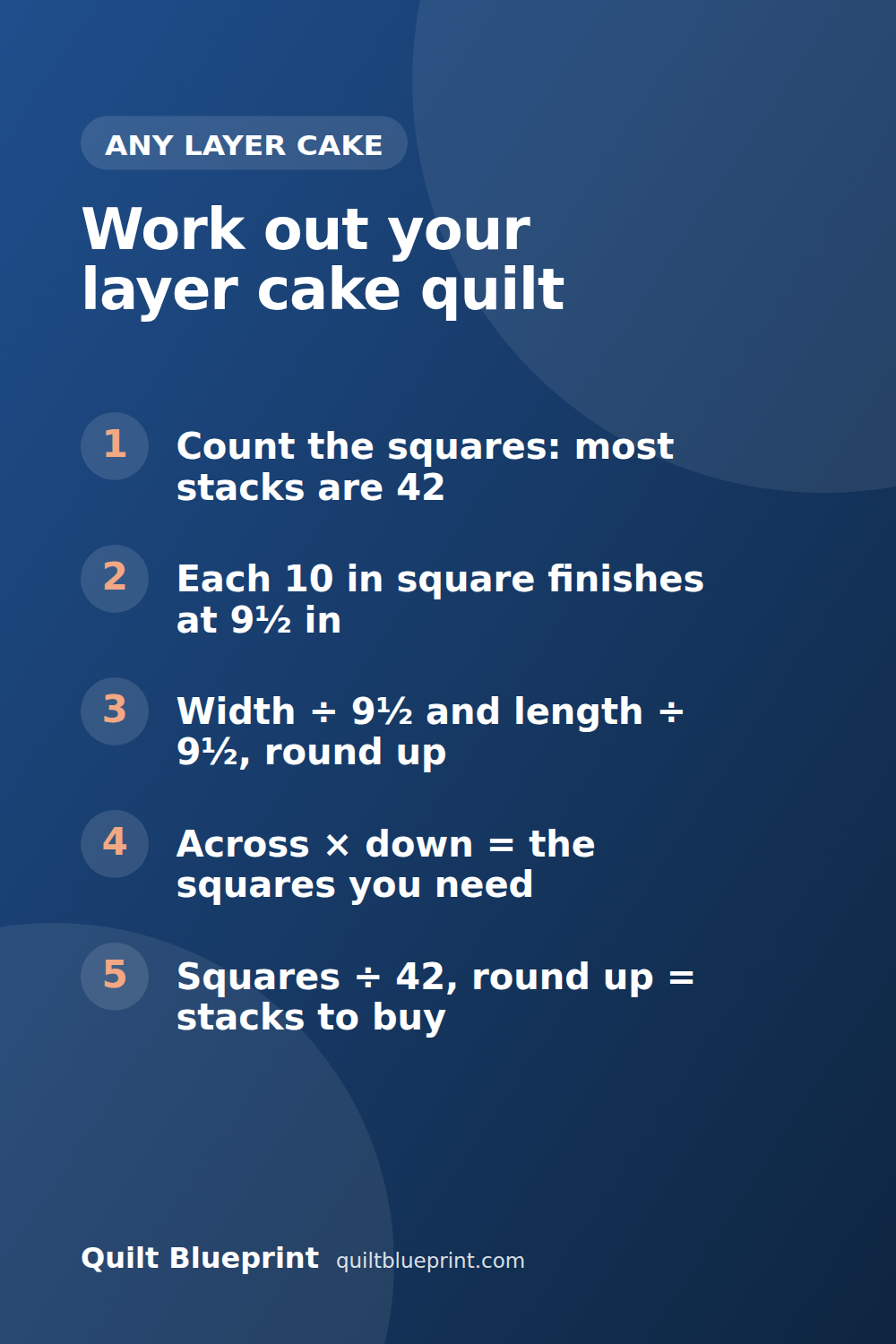
So the sum for any layer cake quilt is short. Multiply the squares across by 9½ for the width, and the squares down by 9½ for the length. Six across is 57 in. Seven down is 66½ in. Plan with 10 instead and you'll expect a 60 × 70 in quilt and get one 3 in narrower and 3½ in shorter.
How many layer cakes for each quilt size
The chart takes each standard size from our quilt size chart and finds the fewest squares across and down that cover it, sewn edge to edge with no sashing or border. Divide the width by 9½ and round up, do the same with the length, and multiply. Then divide the squares by 42 and round up for the stacks to buy.
| Quilt size | Squares | Layer cakes | Top size |
|---|---|---|---|
| Baby, 36 × 36 in | 16 (4 × 4) | 1 (26 spare) | 38 × 38 in (97 × 97 cm) |
| Crib, 36 × 52 in | 24 (4 × 6) | 1 (18 spare) | 38 × 57 in (97 × 145 cm) |
| Throw, 50 × 65 in | 42 (6 × 7) | 1 (0 spare) | 57 × 66½ in (145 × 169 cm) |
| Twin, 70 × 90 in | 80 (8 × 10) | 2 (4 spare) | 76 × 95 in (193 × 241 cm) |
| Full, 84 × 90 in | 90 (9 × 10) | 3 (36 spare) | 85½ × 95 in (217 × 241 cm) |
| Queen, 90 × 95 in | 100 (10 × 10) | 3 (26 spare) | 95 × 95 in (241 × 241 cm) |
| King, 108 × 95 in | 120 (12 × 10) | 3 (6 spare) | 114 × 95 in (290 × 241 cm) |
| Cal king, 104 × 100 in | 121 (11 × 11) | 3 (5 spare) | 104½ × 104½ in (265 × 265 cm) |
Because a square only comes in steps of 9½ in, the top usually lands a few inches over the standard size. The twin, for one, comes out 6 in wider and 5 in longer than 70 × 90 in. If a little under suits your bed better, take one column off: 7 × 10 is 70 squares and 66½ × 95 in (169 × 241 cm), still 2 layer cakes. A twin XL (70 × 95 in) uses the same 8 × 10 layout as the twin.
The spare column is worth a look before you buy. The full needs 90 squares, which is 3 stacks with 36 left over. That's most of a third layer cake sitting in a drawer, and the next section shows how to skip it.
How many layer cakes for a queen size quilt
Three, sewn edge to edge.
A queen is 90 × 95 in (229 × 241 cm), so you need 10 squares across (95 in) and 10 down (95 in). That's 100 squares. Two stacks give you 84, which is 16 short, so the third stack goes in and leaves 26 spare.
Or buy two and a border. Two layer cakes cover a queen once you add a 4 in border, and the border fabric costs a lot less than a third stack. For the queen and the full, the borders go on in the usual order: the two side borders first, then the top and bottom, with strips cut across 42 in fabric and joined end to end.
- Queen from 2 layer cakes: 81 squares, 9 × 9, make a centre of 85½ × 85½ in. A 4 in (10.2 cm) border brings it to 93½ × 93½ in (237 × 237 cm). Cut 9 strips 4½ in wide: that's 1⅛ yd (1.1 m) of border fabric. You have 3 squares spare.
- Full from 2 layer cakes: 72 squares, 8 × 9, make a centre of 76 × 85½ in. A 4 in border brings it to 84 × 93½ in (213 × 237 cm), the full's 84 in width exactly. Cut 9 strips 4½ in wide, 1⅛ yd (1.1 m), and keep 12 squares spare.
- Throw plus a little: one layer cake with a 3 in (7.6 cm) border makes 63 × 72½ in (160 × 184 cm), a roomier sofa quilt from the same 42 squares.
Cut them smaller and the quilt gets smaller
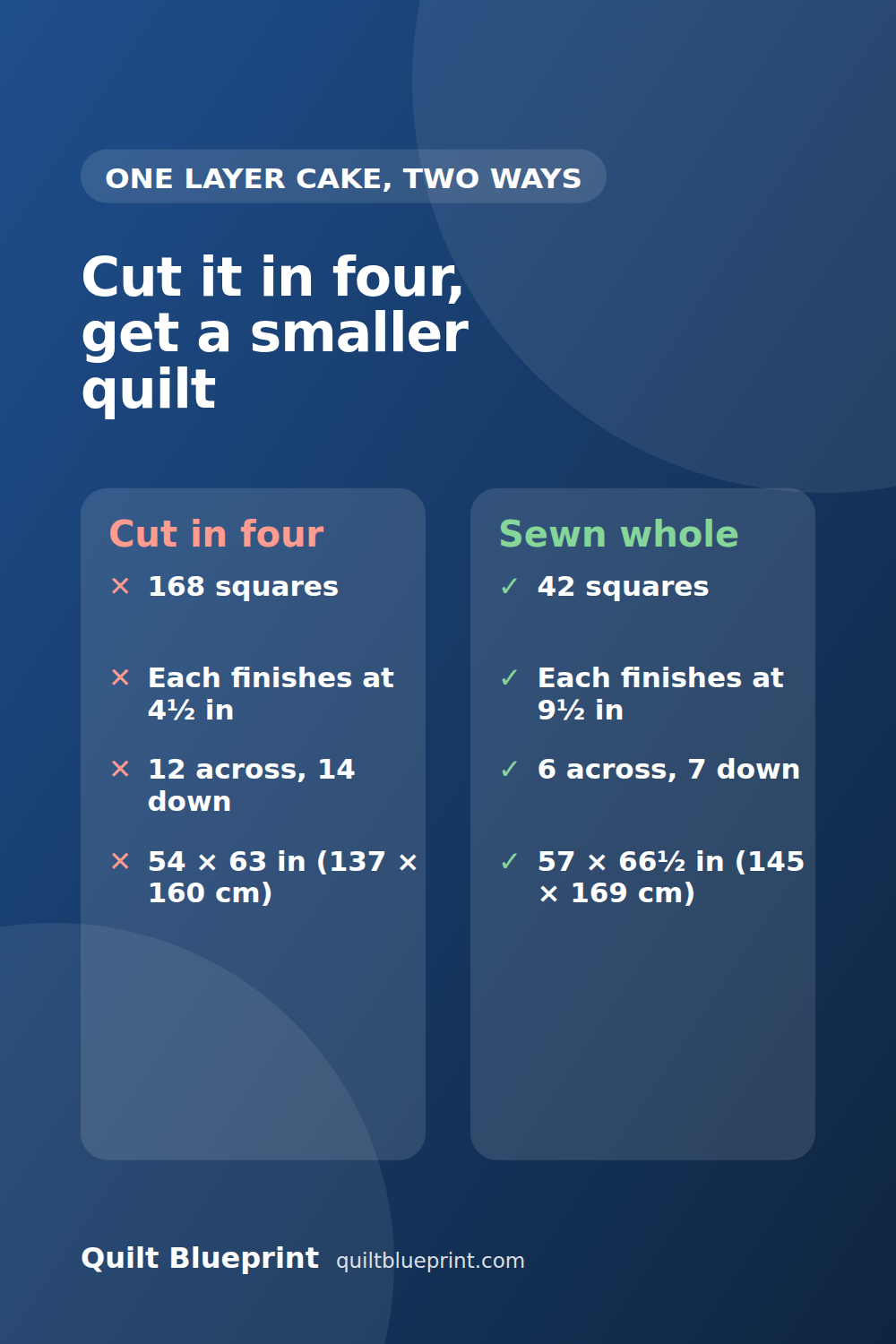
A 10 in square cuts neatly into four 5 in squares, the charm square size. That turns one layer cake into 168 squares, which sounds like more quilt.
It isn't.
Each 5 in square finishes at 4½ in, and 168 of them lay out 12 across and 14 down for 54 × 63 in (137 × 160 cm). That's 3 in narrower and 3½ in shorter than the same stack sewn whole.
The reason is the seams. Every cut adds two more ¼ in seam allowances, and each one eats fabric that never shows. Sewn whole, a square loses ½ in across. Cut in four, the same 10 in loses 1 in across, because there are now two squares in that 10 in and each loses ½ in.
Half-square triangles shrink it more. Our half-square triangle block cuts its squares at the finished size plus ⅞ in, so an 8 in (20.3 cm) triangle square starts from two squares of 8⅞ in (22.5 cm). Trim each 10 in square down to 8⅞ in, pair a dark with a light, and every pair makes two blocks. The 42 squares give 42 blocks, 6 × 7, for 48 × 56 in (122 × 142 cm). The trade is a quilt about 9 in narrower for zigzags, pinwheels or stars instead of plain squares.
None of these is wrong. Just pick the block first and work out the size from it. Picking the size first and hoping the block gets you there is how a throw turns into a baby quilt.
What one layer cake can't cover: backing, binding and batting
A layer cake is the top only. To finish the 57 × 66½ in throw, with 4 in extra on every side of the back and the batting for a longarm quilter, it takes the amounts below. The backing, binding and batting calculators give them for any quilt size.
- Backing: 3⅝ yd (3.4 m) of 42 in wide fabric. The back is cut to 65 × 74½ in. That's two panels, each 65 in long, joined with one seam across the quilt.
- Binding: ½ yd (0.5 m), cut into 7 strips 2½ in wide across the fabric. The quilt's edge is 247 in, plus 10 in for the corners and the join.
- Batting: a twin package (72 × 90 in), the smallest common package that covers 65 × 74½ in. A crib package (45 × 60 in) is too small. Off a 90 in roll, cut 2⅛ yd.
For a twin or bigger, run your own finished size through the same calculators. The backing grows faster than you'd think, because a wider quilt can push it from two panels to three.
Three ways a layer cake count goes wrong
Planning with 10 in squares. It's an easy slip, and it grows with the quilt. Ten squares across a queen are 95 in in the quilt, not 100. The fix is to use 9½ in in every sum, from the first sketch.
Expecting a twin from one stack. You'll see it said that one layer cake makes a throw or even a twin. Sewn edge to edge it doesn't come close.
A twin (70 × 90 in) needs 80 squares in the layout above, and one stack has 42. With a border wide enough to reach 70 × 90 in from 57 × 66½ in, the border would be 6½ in on the sides and nearly 12 in at each end, which is a different quilt.
Counting on 42 without counting. Most stacks are 42, and some aren't. A stack of 40 lays out 5 × 8 for 47½ × 76 in (121 × 193 cm), a long, narrow quilt, or 6 × 6 with 4 spare for 57 × 57 in (145 × 145 cm). Count the squares before you choose the layout.
And if you're weighing a layer cake against fat quarters, the fabric works out close. A layer cake holds 42 × 100 = 4,200 square inches. A fat quarter is 18 × 21 in, or 378 square inches, so one layer cake is about 11 fat quarters' worth of fabric, already cut.
Turning one layer cake into a plan
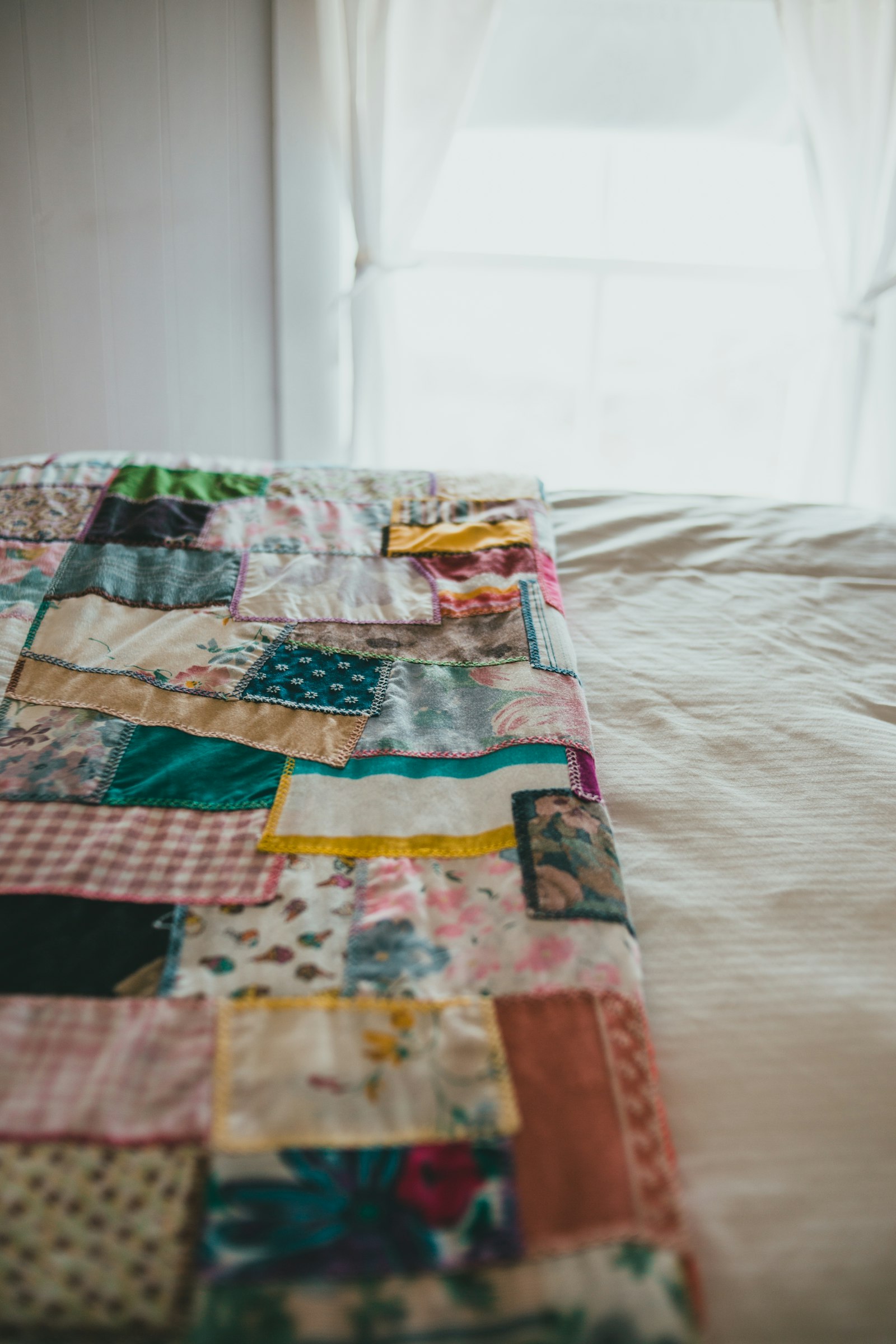
Lay the squares out on a bed or the floor before you sew a single seam. With one collection in one stack, the prints repeat, and a photo from above shows two matching squares side by side much faster than your eye will. Then sew the rows, press the seams of each row the opposite way to the row above, and join the rows.
Questions people ask
What quilt can you make with a layer cake?
A throw. Sewn edge to edge, one 42-square layer cake makes 57 × 66½ in (145 × 169 cm), 6 squares across and 7 down. Cut into 5 in squares it makes 54 × 63 in (137 × 160 cm), and as 8 in half-square triangles 48 × 56 in (122 × 142 cm).
How many layer cakes does it take to make a twin size quilt?
Two. A twin is 70 × 90 in (178 × 229 cm); 80 squares, 8 across and 10 down, make 76 × 95 in (193 × 241 cm), and two stacks of 42 leave 4 spare. For a top 3½ in narrower than a twin, 7 × 10 squares make 66½ × 95 in.
What are some good quilt patterns for making 10-inch layer cakes?
Traditional blocks that keep the squares big: simple squares sewn whole, half-square triangles from pairs of squares, or four patch blocks from squares cut into four. The bigger the pieces, the bigger the quilt one stack makes.
How many baby quilts can you make with a layer cake?
Two. A baby quilt is 36 × 36 in (91 × 91 cm), and 16 squares, 4 × 4, make 38 × 38 in (97 × 97 cm). Two of those take 32 squares, leaving 10 of the 42 spare.
Sources
- Quilt size chart: standard quilt sizes in inches and cm (Quilt Blueprint, read 2026-11-06)
- Half-square triangle quilt block: cut sizes for 4, 6 and 8 in blocks (Quilt Blueprint, read 2026-11-06)
- Simple squares quilt block: the cut size includes ¼ in seams (Quilt Blueprint)
- Quilt backing calculator (Quilt Blueprint)
- Quilt binding calculator (Quilt Blueprint)
- Quilt batting calculator (Quilt Blueprint)
- A Quilter's Ultimate Guide to Layer Cakes: 42 squares of 10 × 10 in (High Country Quilts, read 2026-11-06)
- How many 10 in squares for a quilt: most 10 in stacks are 42 pieces, not all (ThreadWorks, read 2026-11-06)
Keep reading
What Size Quilt Can You Make With 12 Fat Quarters? A Chart From 6 to 40
What size quilt can you make with 12 fat quarters? A 48 × 64 in throw in 8 in squares. A chart for 6 to 40 fat quarters, in inches and cm.
Quilt Backing Fabric Not Wide Enough? 5 Fixes, Worked Out in Inches and cm
Quilt backing fabric not wide enough? Add a strip 1 in wider than the gap, turn the seams, cut less extra or use 108 in backing. Every sum in inches and cm.
What Size Quilt for a Bunk Bed? Top and Bottom Bunk Sizes in Inches and cm
What size quilt for a bunk bed: a top bunk takes the mattress, its depth and a short tuck, about 58 × 85 in. Top and bottom bunk charts in inches and cm.